
Criminal Cases in Brooks County Courts
Brooks Superior Court has general jurisdiction and hears felony cases. Brooks State Court handles misdemeanors. The same elected clerk serves both courts at the Brooks County Courthouse, 100 East Screven Street in Quitman. That shared counter holds the filed case record, including accusations or indictments, motions, court orders, pleas, judgments, and sentencing papers. The official Brooks County courts page also identifies Juvenile Court, whose files are subject to tighter access limits.
Other Brooks County courts create narrower records. Magistrate Court at 315 Screven Street issues arrest and search warrants and performs preliminary criminal functions. Quitman Municipal Court handles city ordinance and authorized traffic matters. A municipal citation does not become a Superior Court file merely because it arose in Brooks County. Start with the court named on the citation, bond paper, or hearing notice. If no document names a court, use the alleged offense and arresting agency to ask the proper clerk where the matter was filed.
A docket is not an arrest report. The clerk records the prosecution, while the arresting agency keeps its investigation narrative and the jail keeps booking data. Readers tracing the event from custody into prosecution can compare the separate Brooks County arrest history channels without treating those records as the court outcome.
Brooks County Criminal Clerk Counter
Clerk Belinda Parker is the custodian named by the county for Superior, State, and Juvenile Court records. The official Brooks County directory is the current route for courthouse contact details. Southern Judicial Circuit materials list the clerk phone as 229-263-4747. Published criminal-record counter hours and copy fees were not found, so call before traveling and ask about inspection, ordinary copies, certified copies, and archived retrieval.
Bring the full party name, an approximate arrest or filing year, and the case number when known. Ask for the docket sheet and disposition first. Those two items often reveal whether the file is open, which counts were filed, and which later documents matter. A certified disposition may be needed when correcting a missing GCIC outcome or documenting how a case ended. Tell the clerk that certification is needed before copies are made.
The source image from the county court description shows the official local route for Brooks County criminal case records.
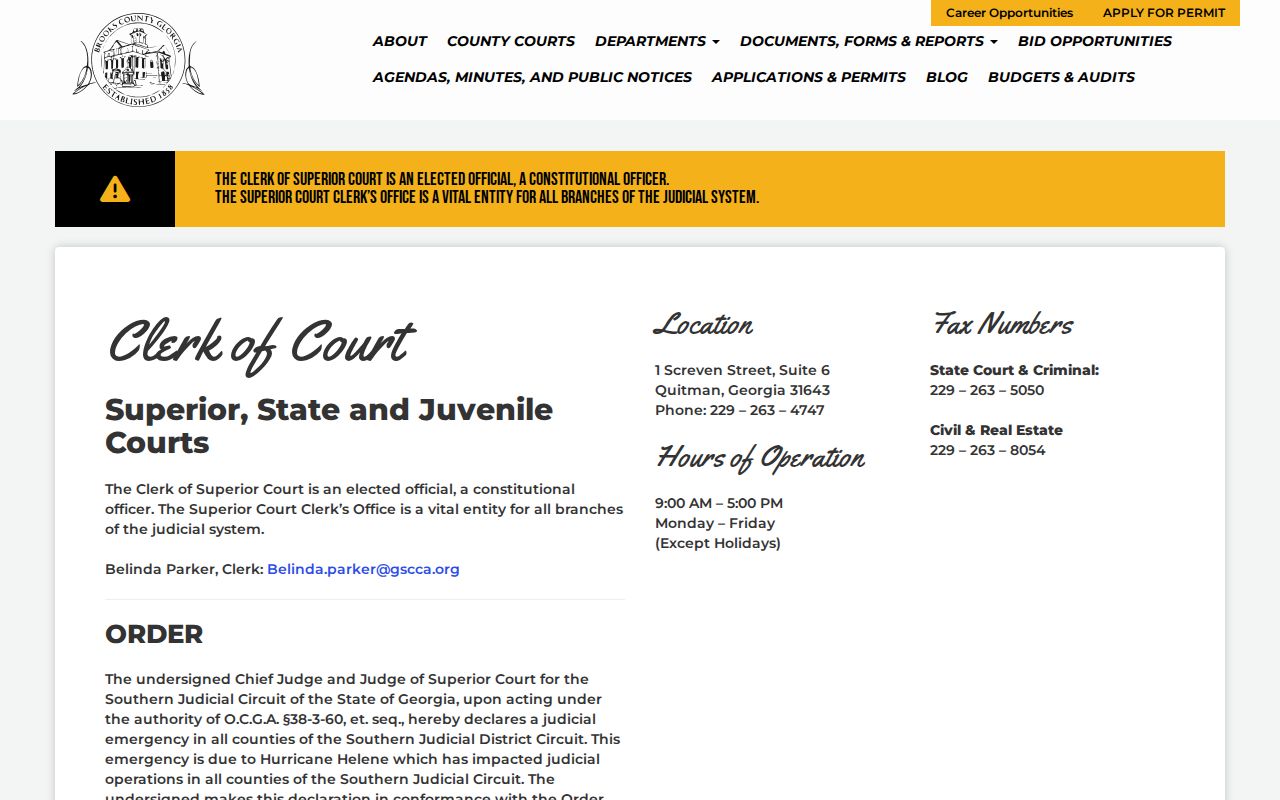
That county page is more authoritative for local custody than an unverified court directory.
How to Search Case Records
Brooks County is not shown on the published participating-court list reached through Georgia Judicial Council E-Access. Therefore, a provider no-result cannot establish that no case exists. Use the local clerk as the main source and the state page as a supplemental routing tool.
- Decide whether the matter is felony, misdemeanor, warrant-only, juvenile, or municipal.
- Call or visit the correct clerk with the full name, filing year, and case number if known.
- Ask first for the docket sheet, charge list, status, and disposition per count.
- Identify the orders, pleadings, or sentencing documents needed, then ask about access and current fees.
- Request a certified copy when the record will support a correction, restriction request, or formal proof of outcome.
The state E-Access to Court Records page warns that participating providers may require accounts. Its controls help route users, but the page does not publish a complete Brooks County docket.
| Field or control | Type | Required | Brooks County use |
|---|---|---|---|
| Find a Court Case | Outbound control | Yes | Routes to a provider |
| Court/provider list | Link list | Yes | Shows participating courts only |
| Account | Login | At provider | State page warns an account is required |
| Party name | Clerk request | Practical | Pair with year or case number |
| Case number | Clerk request | No | Best direct identifier |
Brooks County E-Access Limits
The most common search mistake is treating Georgia E-Access as one statewide database. It is a routing page. Brooks Superior and State Courts were not in the captured participating list, and access at an outside provider can depend on an account. A missing online name may reflect court coverage, spelling, an older paper index, a restricted file, or a delay. It is not a clean-record finding.
When the provider shows nothing, contact the Brooks clerk and ask staff to check the relevant court and older indices. Give spelling variants and the approximate year. For a recent booking without a case number, wait for a filing or ask whether the prosecutor has filed an accusation or indictment. For a warrant-only question, contact Magistrate Court and the sheriff because issuance and service are separate events.
The manifest image captured from the county directory highlights the clerk and courthouse route used when electronic coverage stops.
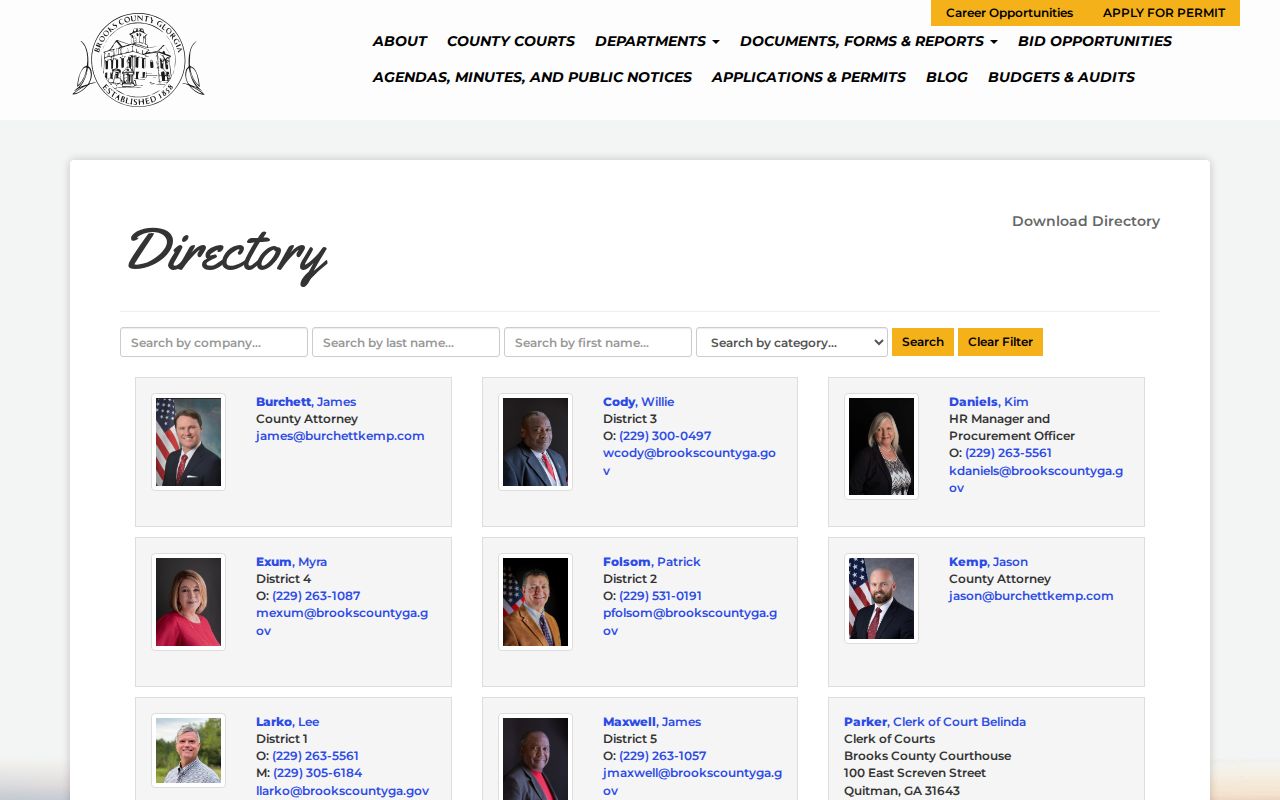
The directory gives a local point of contact without implying that it is an online case database.
What the Case File Shows
A Brooks County criminal case file is organized around the prosecution. It can show a charge as filed, later amendments, hearings, motions, pleas, a verdict, and the result for each count. Not every field will be public in every matter. Juvenile records, sealed material, victim identifiers, financial data, and some active-investigation information may be withheld or redacted.
| Case number and court | Identifies the Brooks court, filing, and docket used to retrieve the file. |
|---|---|
| Charging document | An accusation or indictment states the charges the prosecutor pursued. |
| Docket entries | A dated index of filings, hearings, orders, warrants, and case activity. |
| Hearing dates | Arraignment, motions, trial, plea, and sentencing settings when entered. |
| Disposition and judgment | The outcome for each count, such as conviction, dismissal, acquittal, no bill, or nolle prosequi. |
| Sentence and conditions | Custody, probation, fines, costs, restitution, and other terms when ordered. |
Read count by count. One case can contain several charges with different outcomes. “Nolle prosequi” means the prosecutor formally chose not to continue that count. “No bill” means the grand jury declined to indict. Neither term should be translated into a conviction.
Brooks County Criminal Charge Terms
Georgia uses several charging and outcome terms that can change the meaning of a Brooks County docket. An accusation is a formal prosecutor-filed charging instrument often used where indictment is not required. An indictment is returned by a grand jury. Arraignment is the hearing at which the charge is stated and a plea is entered. A disposition is the final result for a specific charge.
Bond entries concern release conditions while a case is pending. They do not decide guilt. A capias is a court command to take a person into custody, often linked to a failure to appear or comply. First Offender treatment is a Georgia statutory disposition with its own conditions and record effects. Do not infer its effect from a short docket label alone. Obtain the judgment and discharge papers if that status matters.
Felony and misdemeanor labels also control venue. Georgia does not use a simple Class A, B, or C felony chart. Brooks Superior Court hears felonies, while State Court hears misdemeanors. The charged statute supplies the specific penalty range, and amendments can change both the count and its classification.
Stages of a Criminal Case
A Brooks County court file begins only after a charge reaches the court. The jail may record an arrest first, while Magistrate Court may create warrant or preliminary material. The prosecutor then decides whether and what to file. That timing explains why a new booking may have no Superior or State Court number yet.
Case flow: Charges Filed › Arraignment › Pretrial › Plea or Trial › Disposition › Sentencing
At pretrial, the docket may show motions, discovery notices, continuances, bond orders, and hearing settings. A plea or trial produces a result, but each count still needs its own disposition. Sentencing may occur at the same hearing or later. Appeals create another layer and may link to an appellate docket. The clerk file remains the best local source for the operative judgment and sentence.
Brooks County Southern Circuit Cases
Brooks County belongs to the Southern Judicial Circuit with Colquitt, Echols, Lowndes, and Thomas Counties. Judges, the district attorney, and the public defender work within that regional structure, but Brooks filings stay with the Brooks clerk. District Attorney Brad Shealy prosecutes felony Superior Court matters across the circuit. Circuit Public Defender Wade Krueger represents qualifying appointed clients, but that office is not a public records search service.
The five-county structure matters when a hearing notice or lawyer lists a regional office outside Quitman. It does not move the Brooks docket to another county. Use the county and case number on the pleading. Hurricane Helene led to a documented Southern Circuit judicial emergency in 2024, which illustrates how filing and hearing schedules can be disrupted without changing the permanent record custodian.
Federal charges are different. Brooks County lies in the Middle District of Georgia. The official federal court site identifies that district.
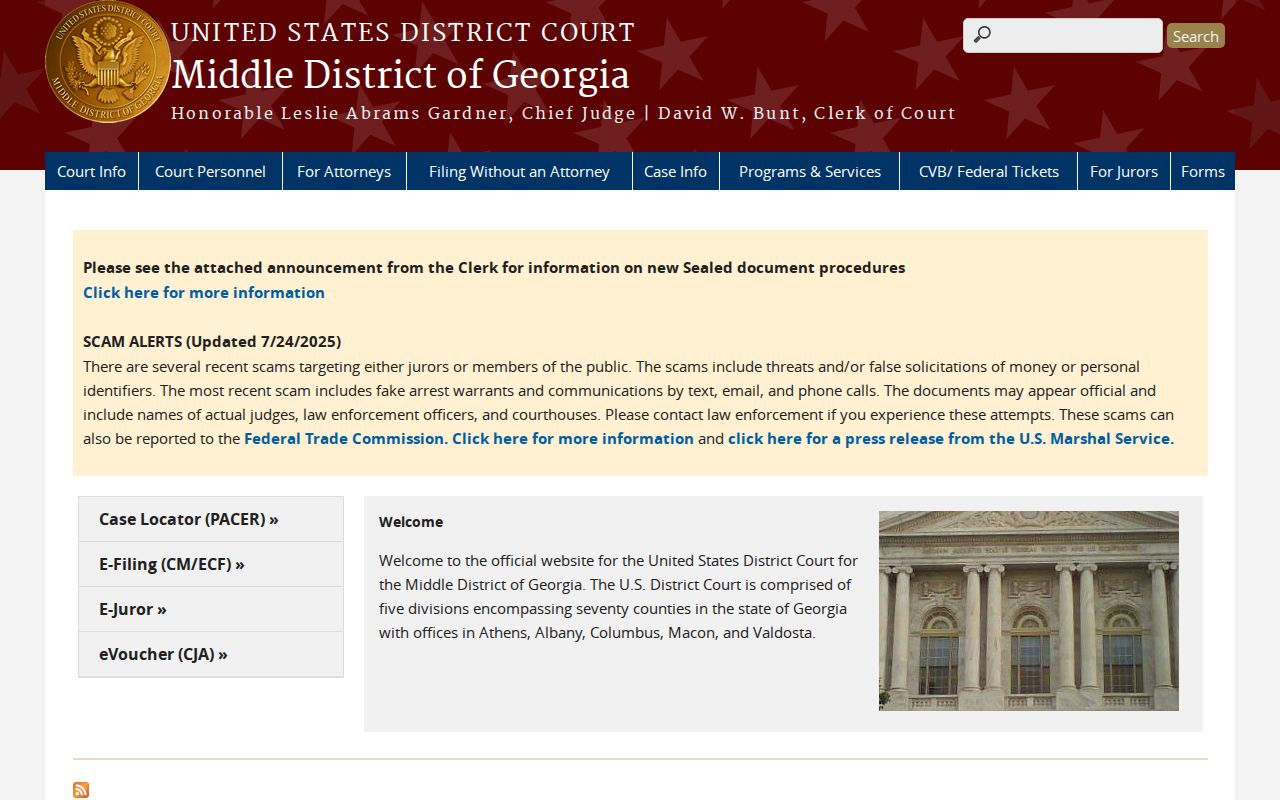
A federal docket belongs in federal court, not in Brooks Superior or State Court merely because the conduct occurred locally.
Certified Brooks County Case Outcomes
A certified disposition can resolve a gap between a court file and a GCIC criminal history. First review the Brooks docket and identify the final result for every count. Then ask the clerk which judgment, dismissal, discharge, or sentence document states that result and whether a certified copy is available. Screenshots and provider summaries may locate the case, but they may not satisfy GCIC or an arresting agency during a correction or record-restriction process.
Georgia calls its relief process “record restriction” under O.C.G.A. §35-3-37. Restriction limits dissemination for noncriminal-justice purposes; it does not mean every agency and court document is physically destroyed. For a missing disposition, correct the record before assuming restriction has been completed. Brooks County did not publish a filing fee or county form in the research, so obtain current instructions directly from the clerk, prosecutor, arresting agency, and GCIC.
Access & Restrictions
Georgia Open Records Act provisions in O.C.G.A. §§50-18-70 through 50-18-77 establish broad access to existing agency records, but court access also reflects sealing orders and rules for protected information. The Act does not require an office to create a new research report. A precise request should identify the case, document, date range, and preferred format.
Juvenile files are not ordinary public adult court records. Sealed warrants, grand-jury deliberations, personal identifiers, protected victim data, and certain active-investigation material can also be unavailable. An online view may redact more than the courthouse file, but a counter request does not override a lawful seal. Ask the clerk to explain the access route and cite the basis for withheld material.
Federal docket users can register with PACER, which has its own account and usage rules.
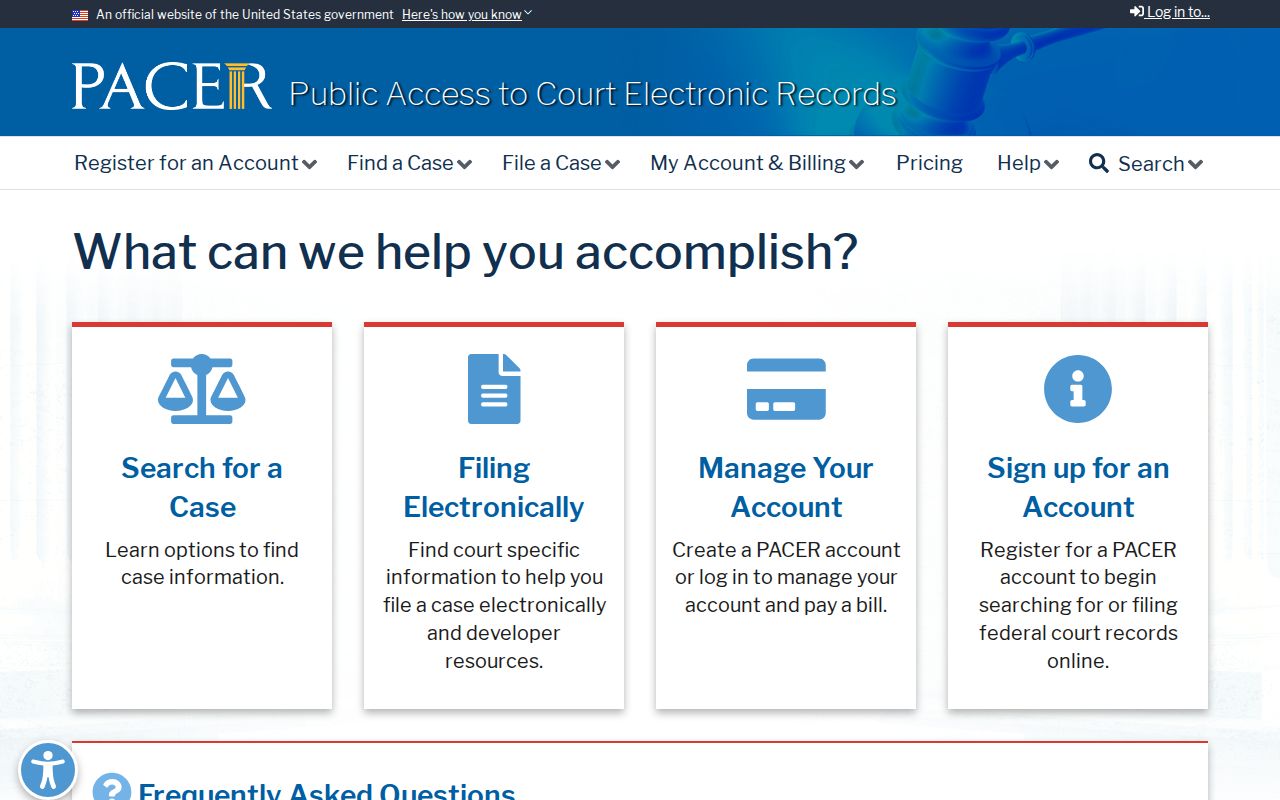
PACER supplements local research only when the matter is federal; it does not search Brooks County court files.