
How to Check Criminal History in Quitman
Start with the document, not just a name. A Quitman police report describes a city incident. A jail sheet records county intake. The municipal court keeps city ordinance and authorized traffic matters. Clerk Belinda Parker keeps filed Superior and State Court cases at the Brooks County Courthouse. GCIC then organizes fingerprint-supported Georgia history, but it does not replace any of those source files.
- Ask Quitman which office holds the police report or city citation.
- Request the existing report with a date, location, and incident number if known.
- Check Quitman Municipal Court when the ticket or ordinance matter stayed in city court.
- Call Brooks County Jail and the county clerk when an arrest became a county booking or prosecution.
- Use an official GCIC product for the broader Georgia record that fits the purpose.
The official City of Quitman website is the verified city contact starting point.
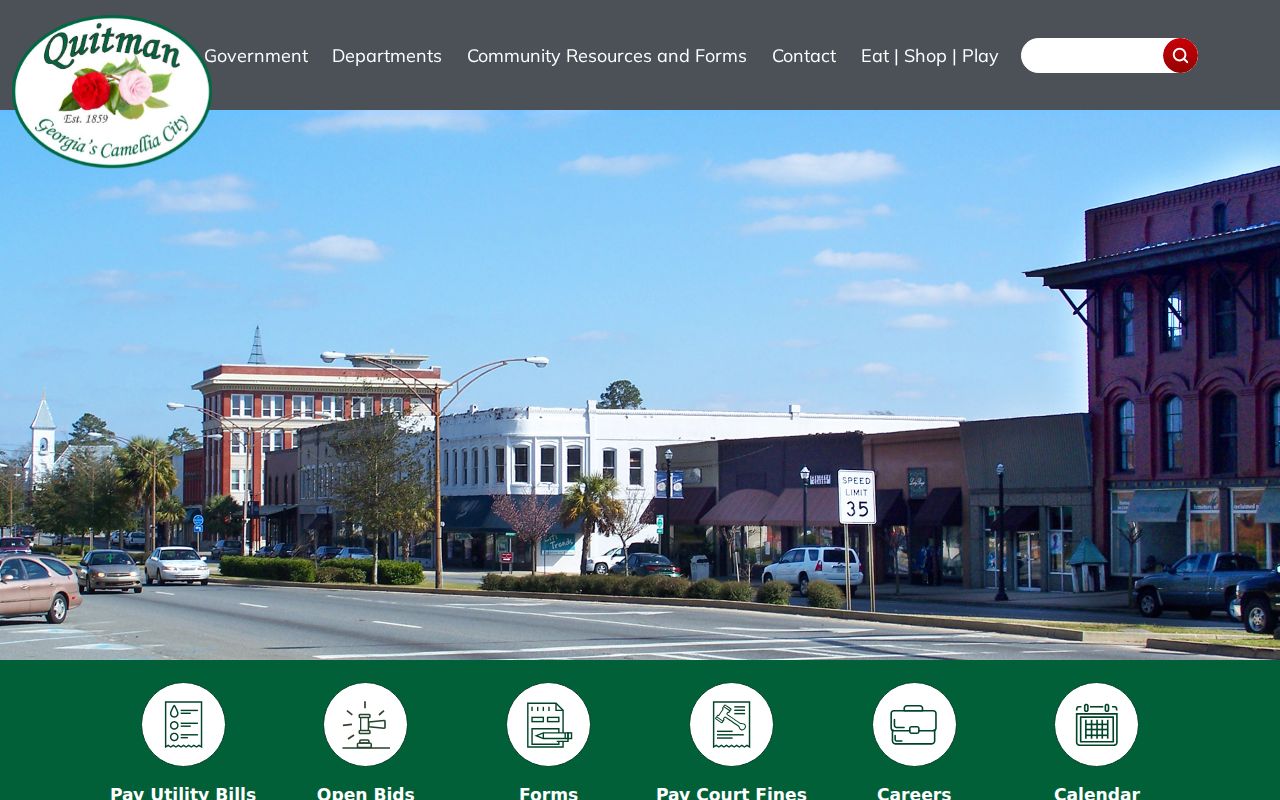
The city site connects a Quitman criminal history request to municipal offices without relying on an unofficial directory.
Quitman Records Across Four Offices
Quitman is the Brooks County seat, so key custodians sit close together but not at one counter. The county clerk is at 100 East Screven Street. Magistrate Court, which issues criminal arrest and search warrants, is at 315 Screven Street. Sheriff administration is at 1 Screven Street, Suite 3. CID and the jail are on Holloway Drive at 1004 and 1003. A short physical distance can hide a major records difference.
Choose the office by function. The clerk supplies filed charges, docket events, dispositions, sentences, and certified copies. Magistrate Court handles its warrant and preliminary records. CID keeps sheriff investigations and local registry administration. The jail answers current county custody and booking questions. Published counter hours and local copy fees were not found, so call before travel and ask about cost, certification, and retrieval time.
This split is most important when a requester needs proof of an outcome. A police narrative or booking sheet may identify the event, but a certified disposition comes from the clerk after a case is filed and resolved. For an active-warrant concern, contact the issuing court and sheriff for safe instructions. An open-records request may retrieve an older warrant record, yet it cannot guarantee a real-time clearance result.
The Quitman Police Department
Quitman Police creates incident and arrest reports for events it investigates within the city. A police file may contain the incident number, date, place, officer, alleged offense, narrative, evidence details, and witness information subject to lawful redaction. No current official police records request form, separate records portal, fee schedule, or app was located. Use quitmanga.gov and ask for the designated open-records officer, the current fee, identity or release rules, and delivery options.
A useful written request names the existing record and gives a tight date range, exact place, report type, incident number if known, and preferred format. The city does not have to create a new research report. Pending-investigation details, juvenile data, protected victim information, medical facts, and private identifiers may be withheld or redacted. If Georgia State Patrol handled a highway or crash event, use the state agency's channel instead of assuming Quitman Police has the report.
Quitman Police Report or Jail Sheet
These records answer different questions. The police report explains what officers documented and why an arrest occurred. The Brooks County Jail sheet tracks intake, charges presented at booking, bond or holds, release, and transfer. Neither proves guilt, and neither supplies the final filed disposition.
| Record | Custodian | Best Use |
|---|---|---|
| Incident or arrest report | Quitman Police | Event narrative and officer record |
| Booking record | Brooks County Jail | Intake, bond, custody, release, or transfer |
| City citation docket | Quitman Municipal Court | City case events and outcome |
| Felony or misdemeanor file | Brooks Superior or State Court clerk | Filed counts and final disposition |
A same-name match is not enough. Compare dates, agency, incident or case number, and other lawful identifiers. Charges at intake may change after prosecutor review, so the clerk's disposition must be read count by count.
Arrests and Bookings in Quitman
Quitman arrestees are traced into Brooks County Jail at 1003 Holloway Drive. For the newest custody question, call 229-263-8153 and ask what information is currently releasable. Useful prompts include the full booked name, approximate booking date, arresting agency, booking number, public charges, bond status, and release or transfer state. The phone channel is not proof that every field will be released.
Brooks County publishes a “Daily Jail Population” link, yet researchers did not find a stable, inspectable public booking form. The safe fallback is the jail line, followed by a narrow Georgia Open Records Act request for an existing booking sheet. Do not replace the missing roster with a commercial mugshot site. The jail reports 112 beds and an average daily population of 64 on the sheriff's official staff page, but those scale facts do not describe a specific arrest.
For a fuller explanation of custody layers, use the Brooks County arrest history resource. State-sentenced custody later moves to the Georgia Department of Corrections, while federal custody belongs to the Bureau of Prisons.
Quitman Municipal Court Records
Quitman's charter establishes a municipal or police court for ordinance offenses. It also permits preliminary commitment and bail functions when a matter exceeds city jurisdiction. The city site offers “Pay Court Fines,” but a payment entry is not a full case search. It may help act on a known citation, not reveal every docket event, document, or final issue.
| Court Name | Quitman Municipal Court |
|---|---|
| Case Types Heard | City ordinance and authorized traffic matters; jurisdiction is limited by law |
| Case Lookup Channel | Contact the city or court; no complete official online docket was located |
| What the Docket Shows | Citation or case identifier, events, plea, judgment, and payment data as kept |
| Copies & Fees | Ask the court for current inspection, copy, and certification terms |
The officially hosted Quitman charter provisions define the municipal court's role.
The charter explains why a city ordinance can stay in Quitman while a felony must move into the county court system.
Quitman Fine Payment Is Not Search
A payment page begins with a known obligation. A records search asks whether a case exists and what happened in it. Treating one as the other can hide amended counts, hearing history, a warrant entry, or a later disposition. For a complete municipal record, request the docket and identify which documents can be inspected or copied.
Georgia DDS reported that Quitman Municipal Court transmitted 34 citations in its August 2025 snapshot, with seven outstanding errors. That narrow figure reflects one monthly administrative transmission. It is not the city's arrest count, all court volume, or crime rate. The error count shows why a person resolving a citation should keep receipts, note the citation number, and ask the court to verify a correction at its source.
If the citation record and a state report do not agree, start with the Quitman court that created the entry. Provide the citation number, the date, and proof of the action already taken. Ask what correction the court will send and how long its reporting cycle usually takes. Keep the written reply. A later state display may lag behind the source even after the city has fixed its own docket.
Where Quitman Records End Up
A city incident starts with Quitman Police. If an arrest follows, Brooks County Jail creates a separate booking entry. A qualifying city citation can remain in municipal court. Felony charges go to Superior Court, while county misdemeanors go to State Court. Clerk Belinda Parker keeps those filed cases at 100 East Screven Street.
Record flow: Quitman Police Department › Brooks County Jail or Courts › Georgia Bureau of Investigation and GCIC
Fingerprints and arrest data can reach GCIC before the final prosecution outcome does. Recent city activity may therefore be visible at the police or jail stage before a clerk case number exists. Once the prosecutor files charges, the court file becomes the best source for the accusation or indictment, plea, disposition, and sentence. If a GCIC history lacks that outcome, obtain a certified clerk disposition and ask the contributing agency or GCIC about correction.
A Quitman Felony Leaves City Court
Georgia does not use a broad Class A, B, and C felony ladder. A felony is defined by its potential punishment, and the charged statute supplies the range. Quitman Municipal Court does not become the felony trial court simply because police made the arrest inside the city. The matter moves through prosecutor review to Brooks Superior Court, which has general felony jurisdiction.
Misdemeanors generally belong in Brooks State Court, subject to authorized municipal jurisdiction for certain matters. Magistrate Court may issue the arrest warrant and conduct early functions without becoming the final felony venue. This split explains why one event can create a municipal entry, a Magistrate warrant record, a jail booking, and a Superior Court file. Searchers should not merge the stages or label an initial allegation a conviction.
Quitman Cases and GBI Coordination
GBI's December 2025 release about a Quitman deadly-shooting investigation documented state and local coordination. It is a useful records-routing example, not a city crime trend. Quitman Police may hold the first incident record, GBI may hold records from its assistance, the jail may record custody, and the county clerk may later keep the prosecution file. Each agency can apply its own lawful redactions to the material it holds.
The official GBI press release archive publishes selected major investigations.
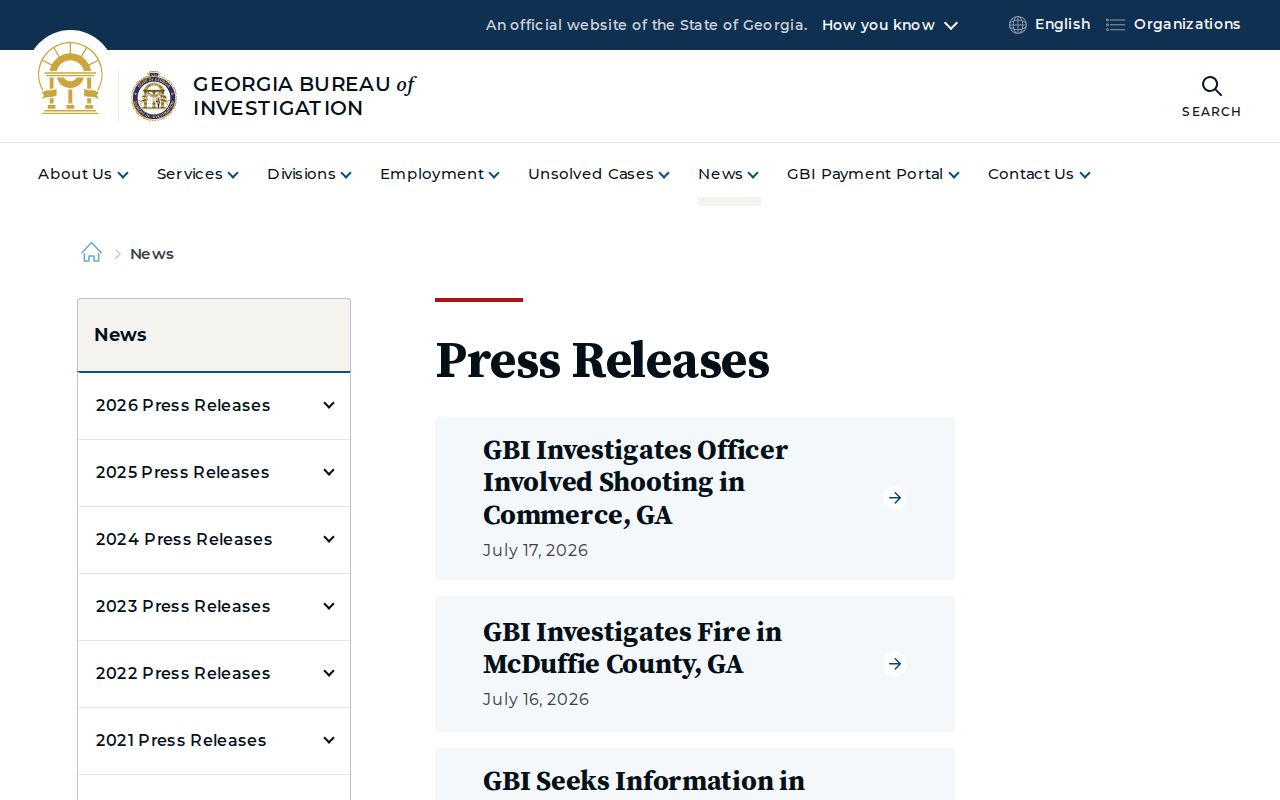
A release can identify involved agencies and dates, but it is not a complete arrest log or substitute for the underlying Quitman and Brooks County files.
Requesting Quitman Criminal Records
Georgia's Open Records Act applies to existing city records. O.C.G.A. §50-18-70 sets a broad presumption of access. Section 50-18-71 supplies the response and production framework, permits lawful fees, and does not require an agency to create a report. Section 50-18-72 lists exemptions, including protected parts of pending investigations.
Send a narrow request to the office that created the record. State the incident or citation number, exact or approximate date, location, agency, record type, and preferred format. Ask for an estimate if retrieval or redaction could carry a fee. The three-business-day rule is a response framework, not a promise that a large file will be copied at once. If access is denied, ask the office to identify the legal basis.
Separate requests can be necessary for one event. Quitman may hold the incident report, the jail may hold the intake sheet, and the clerk may hold the case docket. Sending one broad demand to the city will not make it the custodian of county records. A focused request also makes it easier for staff to locate an existing file without being asked to compile a new history.
Public Access Rules
Quitman police and municipal records are public only to the extent Georgia law permits. Juvenile material, Social Security numbers, financial data, protected victim details, active investigative facts, sealed warrants, and other exempt content may be removed. GCIC criminal-history dissemination follows a distinct statute, so an ordinary city request does not produce another person's full repository file.
Key Statutes:
O.C.G.A. §§50-18-70 through 50-18-72 establish access, response, fee, and exemption rules for agency records.
O.C.G.A. §35-3-34 governs GCIC criminal-history dissemination rather than ordinary court-file access.
O.C.G.A. §35-3-37 governs Georgia record restriction and related prosecutor or court steps.
For help understanding counsel options rather than searching a record, the State Bar of Georgia public legal-aid page provides official public information.
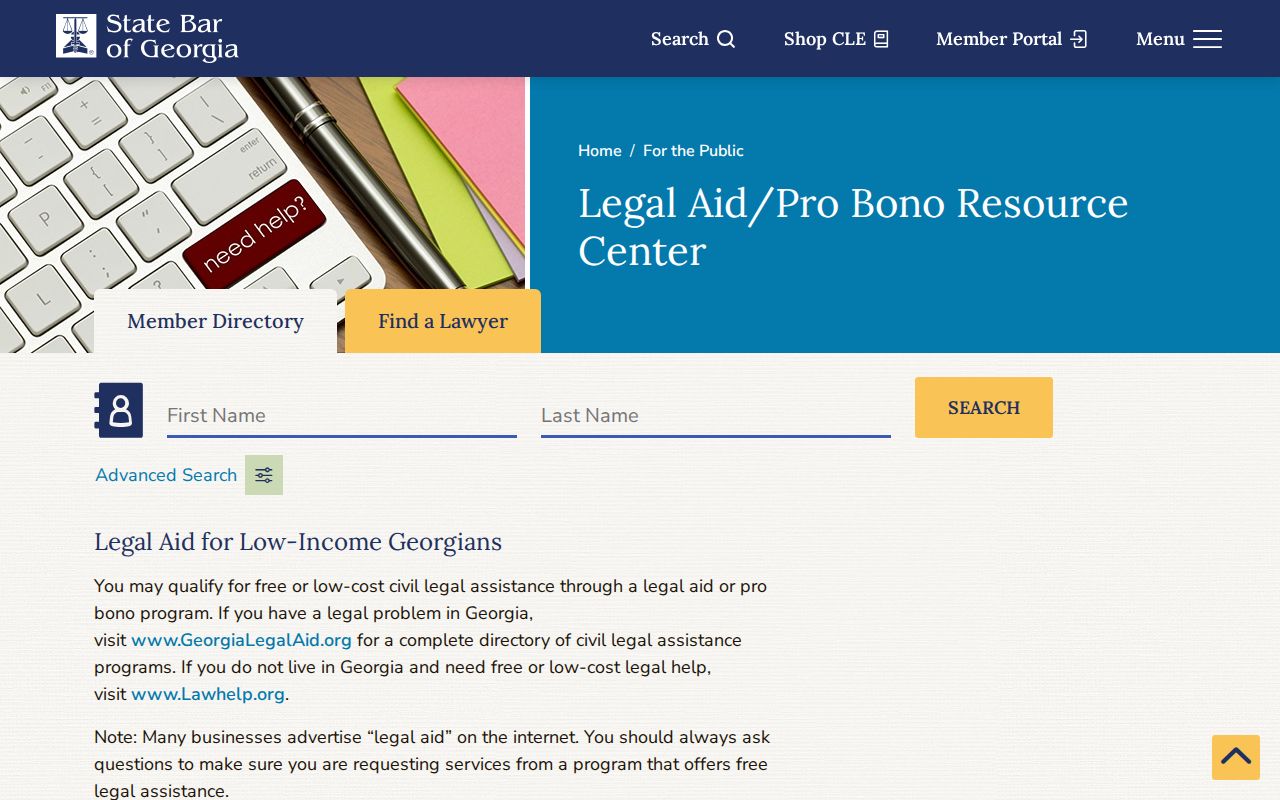
Legal-aid information can help a person act on a record, while the record itself still comes from Quitman, Brooks County, or GCIC.